Where is Mustang Nepal located in the world map
Where is Mustang Nepal located on the world map
Mustang, also known as the Kingdom of Lo. Mustang located in northern center part of Nepal in the Himalayas. Mustang Nepal is situated behind the Annapurna and Dhaulagiri mountain ranges. It is one of the most remote and least populated areas of Himalayas. the Lost Kingdom Nestled in the rain-shadow of the mighty Annapurna and Dhaulagiri ranges, Upper Mustang is a rare gem that feels more like Tibet than Nepal.
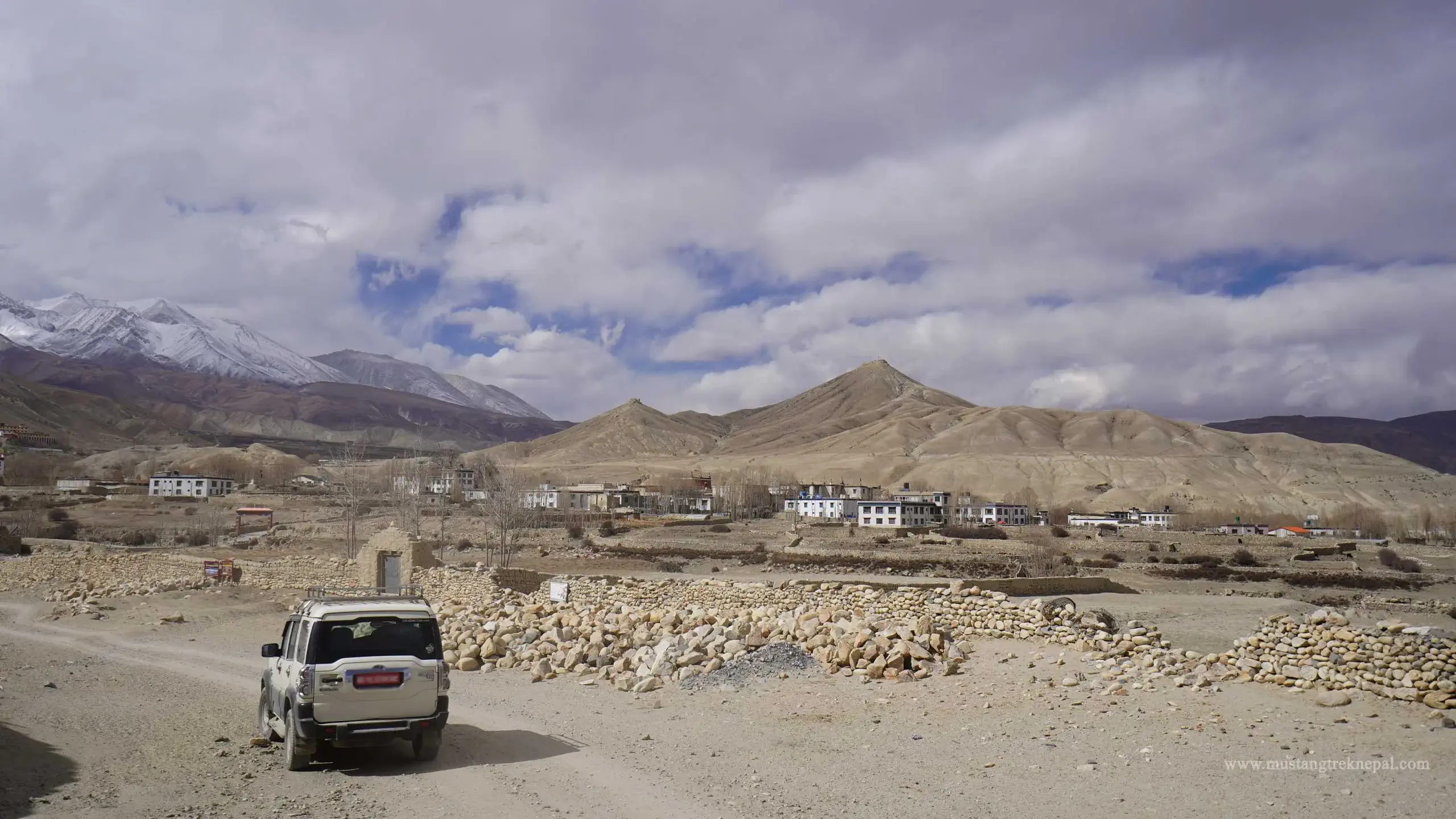
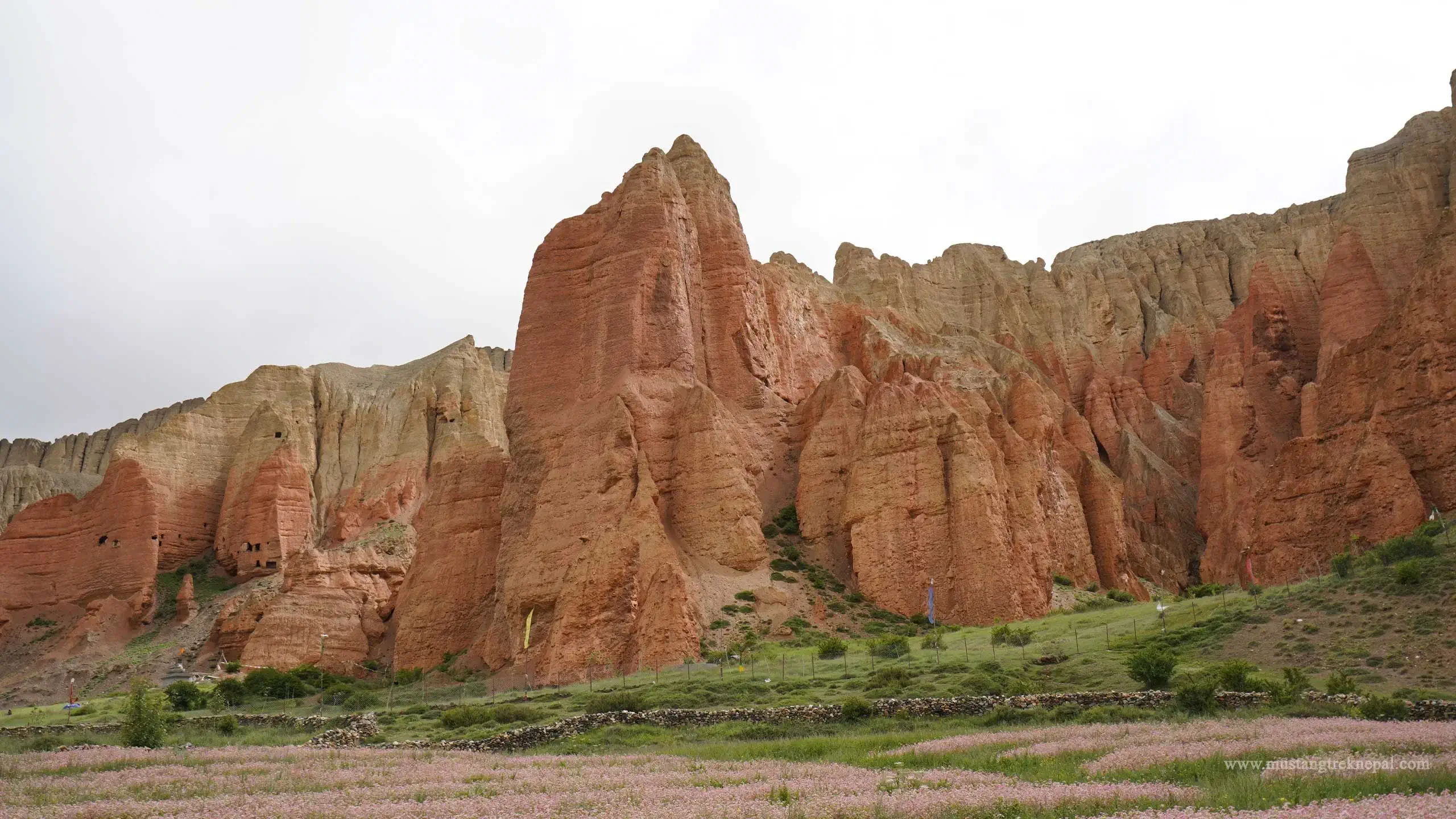
Mustang is divided into two parts: Upper Mustang and Lower Mustang. Upper Mustang located in the rain shadow of the Himalayas, which means that it receives very little rainfall throughout the year. This has resulted in a unique landscape of barren deserts, rocky canyons, and towering cliffs. The region is also known for its historic villages, monasteries, palaces, and ancient caves etc.
Upper Mustang is often described as a “Little Tibet” tucked away in the rain shadow of the Himalayas. It’s a place where time seems to have paused, offering a landscape of wind-sculpted canyons, ancient monasteries, and the vibrant culture of the Loba people. Upper Mustang is one of the mystical and culturally preserved regions in Nepal.
Lower Mustang, on the other hand, is located at a lower elevation and is more densely populated than Upper Mustang. The region is characterized by lush forests, fertile valleys, and traditional Nepalese villages. It is also home to famous pilgrimage site of Muktinath.
Let’s plan a custom trip now for you to travel culturally rich and naturally beautiful Nepal.
| Upper Mustang Packages | |
| Upper Mustang trek | Upper Mustang tour |
| Ghar Gompa tour | Lo Manthang tour |
| Upper Mustang circuit trek | Mustang Tiji Festival tour |
| Pokhara to Upper Mustang tour | Damodar Kunda tour |
| Luri Gumba tour | Mustang trips Nepal |
Where is Mustang Nepal
The Mustang is distant and isolated part of Himalayas. It is located in between Annapurna and Dhaulagiri range and Tibetan plateau in the northern central part of Nepal. Mustang district shares a long international border with Tibet of China to the north. To the south, east and west it is bordered by the Nepalese districts of Myagdi, Manang and Dolpa. It helps all you to know about mustang Nepal location on the world map. Traditional culture, high altitude desert, ancient caves, deep gorges and dramatic landscape are the major attraction of the last forbidden kingdom.
The independent Kingdom was founded in 1380 by Ame Pal. It was annexed by Nepal in 18th century. In 1950 the former Kingdom of Lo officially declared part of Nepal. One of the most preserved regions in the world the upper mustang open for limited tourist to visit since 1992. The region is known for its stunning natural beauty, rich cultural heritage, and unique Tibetan-influenced architecture. Special permit is essential to discover mustang Nepal.
Mustang is located in the Trans-Himalayan region, which means it lies north of the main Himalayan range, specifically the Dhaulagiri and Annapurna massifs. It is often called the “Last Forbidden Kingdom” because it remained restricted to foreign visitors until 1992.
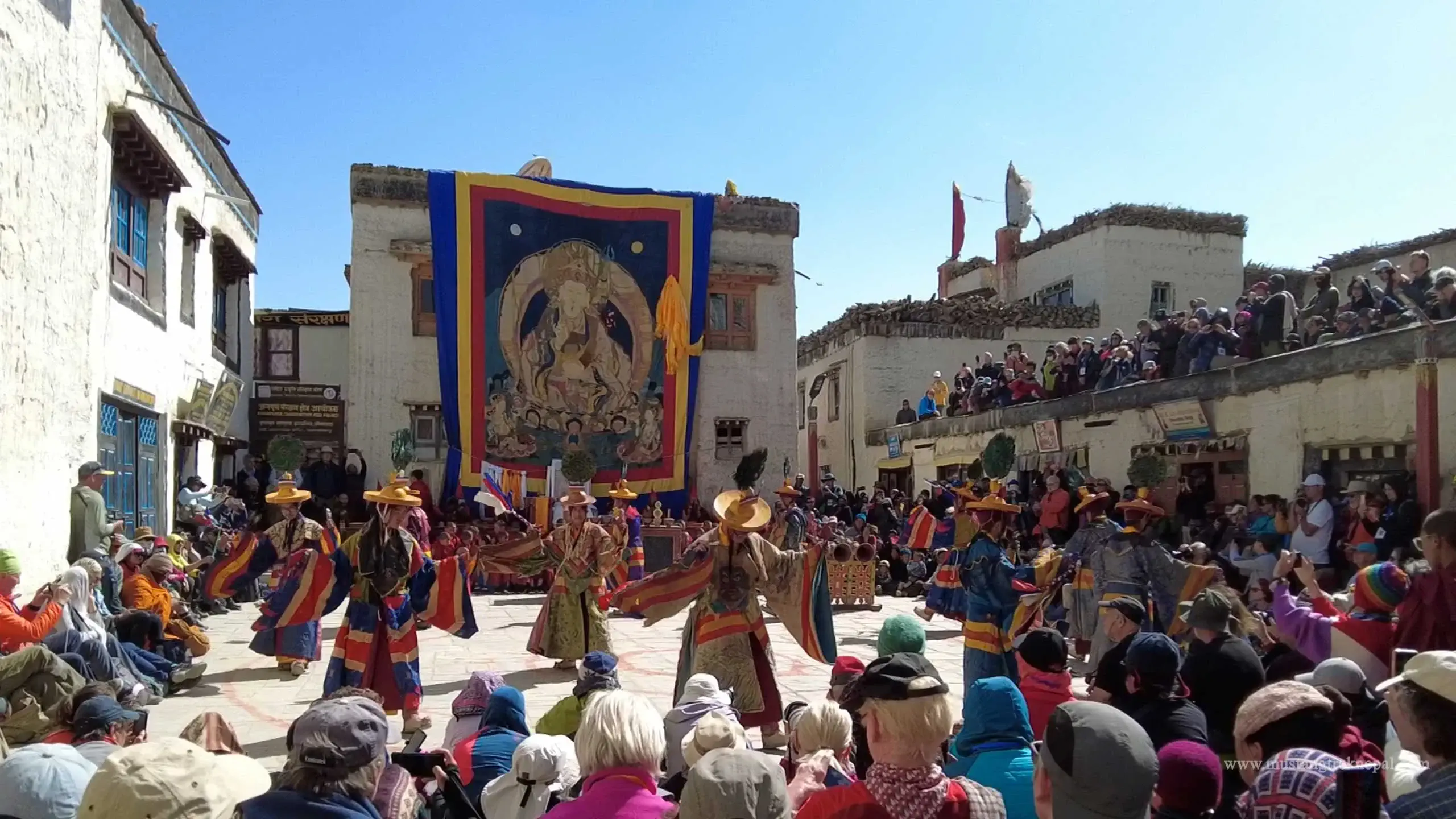
The cultural center of Upper Mustang is Lo Manthang, an ancient walled city that preserves Tibetan Buddhist traditions, monasteries, sky caves, and unique desert-like landscapes. Upper Mustang, in Nepal’s Gandaki Province, is the northern part of Mustang District, once the independent Kingdom of Lo. It features high-altitude deserts, red rock cliffs, ancient monasteries, and villages like Lo Manthang, with residents speaking Tabetic languages and preserving Tibetan Buddhist traditions.
Geographical Location of Mustang Nepal
Country: Nepal
Province: Gandaki
District: Mustang
Administrative headquarters: Jomsom
Region: Western/North-central Himalaya of Nepal
Border: North with Tibet, China, East with Manang, West Dolpa and south Myagdi
Major river: Kali Gandaki
Major settlements: Jomsom, Marpha, Kagbeni, Muktinath, Tsarang and Lo Manthang
Major tourist areas: Lower Mustang (Muktinath) and Upper Mustang (Lo-manthang)
Total Area: Covers 3,573 square kilometers / (1,380 sq mi), it is fifth-largest district of Nepal.
Coordinates: Roughly 28.78°N to 29.05°N and 83.73°E to 84.15°E (approximate center around 28.78°N, 83.73°E).
Elevation: Ranges from around 2,010 m Ghasa in the south to over 8,000 m Mount Dhaulagiri (7th highest peak of the world).
Brief information about Upper Mustang
Mustang was once an independent kingdom, with its own language, culture, and customs. Lo Manthang is the capital of upper mustang. Arts, culture tradition and religion of this area are very similar to the Tibet. Most of the local speak Tibetan language territory also similar to Tibet. Main occupations of the inhabitant in this area are tourism, trading and animal husbandry.
Where is mustang situated?
Upper mustang Nepal situated in the middle of Himalayas along with the Kaligandaki River. It runs in southward direction to Nepal and in between it bisects Mustang. Vehicles and trekkers pass along the narrow cliffs, go up to cave, absorb the silence and interesting views of the blue sky and mountains. The river route was used for trading salt and was a major route of trade for Tibet and India. Kali Gandaki gorge is formed by the river valley parts in the south of Mustang Nepal. This gorge is also the deepest in the world.
Upper Mustang to experience the Tibetan plateau in Nepal
Discover the typical Tibetan settlements, ancient man-made caves, Tibetan culture and nature splendor of Mustang. It is a place surrounded by hills on all sides despite having Himalayas just behind. It is a landscape which seems no less than a dream.
This area is not crowed because of the expenditure, small number of tourist visit each year. This is surely a onetime experience that you must get once in your lifetime. Upper Mustang has maintained its uniqueness it brings you close to the Tibetan culture of traditional times.
Q: Where is Upper Mustang?
Upper Mustang located in mustang district, Gandaki Pradesh in northern Nepal, near the border of Tibet of China.
Q: How to get to upper mustang Nepal / how to reach upper mustang?
Upper mustang area accessible by flight (Pokhara to Jomsom) and overland by drive via Kusma and Beni. one can go to Nepal Mustang by foot, drive and flight.
Q: Where does Upper Mustang start?
Upper mustang area begins from Kagbeni village in Mustang district Nepal.
Q: Is Mustang similar to Tibet?
People, culture and life style of the residence of Upper mustang very similar to Tibet.
Q: What are the things to do in Mustang, Nepal?
Trekking, tours and sightseeing are the main things to do in upper mustang Nepal.
Q: What found in upper mustang?
Large deposit of uranium Found in upper mustang Nepal
Q: Why is Upper Mustang restricted?
Upper mustang was restricted area for foreigners till 1992. Upper mustang area still under control of government of Nepal to preserve, strategic location, its unique nature and culture in real form.
Q: When is the best time to visit upper mustang?
The weather condition of upper mustang area stays best from the months of March to November. Among of these months May, October and august are highly recommended months to visit Upper mustang.
Q: Is Upper Mustang open?
Of course! To enter mustang region, need to obtain special permits, ACAP permit, TIMS and need support of guide to visit upper mustang.
Q: Why is Mustang famous ?/
1: Mustang is particularly famous for
2: Muktinath Temple (pilgrimage )
3: Kali Gandaki Valley
4: Upper Mustang and Lo Manthang
5: Ancient Buddhist monasteries
6: Traditional villages in Himalayas
7: Ancient caves and cliff settlements
8: Dramatic red, brown and grey landscapes
9: Apple orchards and Thakali culture
10: Trans-Himalayan scenery and high-altitude desert landscapes
11: Sky caves in high cliff
Q: How old are Mustang caves? How old are the sky caves in Nepal?
Some research shows that the age of sky caves of mustang about 2,000–3,000 years old.
Q: Which place is called Desert of Nepal?
Terren of mustang look like a part of desert in this way it called desert of Nepal, lower to mustang area known as a deserts of Nepal.
Q: Which fruit is famous in Mustang?
Organic Apple of Mustang famous all over Nepal.
Q: What is upper mustang?
Upper mustang is the Last Forbidden Kingdom of Lo, these days’ whole mustang area is a part of Nepal.
Q: Why Mustang is major tourist destination in Nepal?
Mustang is one of the major tourist destination because of its exclusive nature, cultural heritage and religious importance. it is a part of world famous Annapurna circuit trek, Upper mustang trek, Muktinath pilgrimage tour etc., which many tourists from around the world.
Q: What does Mustang mean in Nepal? / What is Upper Mustang called?
Upper Mustang known as the former “Kingdom of Lo,” is an isolated area of Nepal. Mustang word originate from the Tibetan word “Muntan” its meaning “fertile plain”. Upper Mustang was only opened to foreigners in 1992.
Q: Is Mustang part of the Annapurna region?
Yes. Mustang is closely associated with the Annapurna trekking region, particularly the Kali Gandaki Valley, Muktinath and the northern section of Annapurna Circuit in Annapurna conservation area.
Q: Is Lo Manthang in Mustang?
Yes. Lo Manthang is in Upper Mustang and was historically the capital of the Kingdom of Lo. It is famous for its walled settlement, monasteries and distinctive Tibetan-influenced culture.
Q: Why is Mustang called the “Forbidden Kingdom”?
Upper Mustang was historically known as the Kingdom of Lo and remained relatively isolated from the outside world for centuries. Foreigners were not permitted to enter the region until the early 1990s, contributing to the preservation of its traditional culture and architecture.
Q: What makes Mustang different from other parts of Nepal?
The biggest difference is its trans-Himalayan landscape and culture. While much of Nepal is characterized by green hills, forests and terraced farmland, Mustang features dry valleys, colorful cliffs, high-altitude plateaus, caves, monasteries and strong Tibetan cultural influences.
Q: Is Mustang the same as Upper Mustang?
No. Mustang is the entire district, while Upper Mustang is its northern section. Lower Mustang includes areas such as Jomsom, Marpha, Tukuche, Kagbeni, and Muktinath; Upper Mustang includes Lo Manthang and the historic Kingdom of Lo.
Q: Is Mustang close to Tibet?
Yes. Mustang shares a northern border with the Tibet of China. Its language, architecture, religion, and traditional culture have strong Tibetan influences.
Q: What is the best way to reach Mustang?
The fastest common route is to fly from Pokhara to Jomsom. Travelers can also reach Mustang by jeep or private vehicle through Beni and the Kali Gandaki corridor. Upper Mustang is usually explored by jeep, trekking, or a combination of both.
Q: Why does Mustang look like a desert?
It lies in the rain shadow of the Annapurna and Dhaulagiri ranges, receiving very little rainfall (often under 250–300 mm per year in parts). This creates arid, Tibetan-style highlands instead of the lush scenery found elsewhere in Nepal.
Q: What is the population and culture like?
It is sparsely populated (around 14,000–15,000 people). The culture is strongly Tibetan Buddhist, with Loba (Lo-pa) people, ancient monasteries, sky caves, and traditions distinct from the rest of Nepal.
Mustang is famous for its spectacular trans-Himalayan landscape, Tibetan-influenced culture, ancient monasteries, caves, traditional villages, apple orchards, and pilgrimage sites such as Muktinath. The northern part, known as Upper Mustang, is particularly famous for its desert-like landscape and the ancient walled settlement of Lo Manthang.
24/7: Get trip ideas from our travel specialist as per your desire & duration of holidays.